

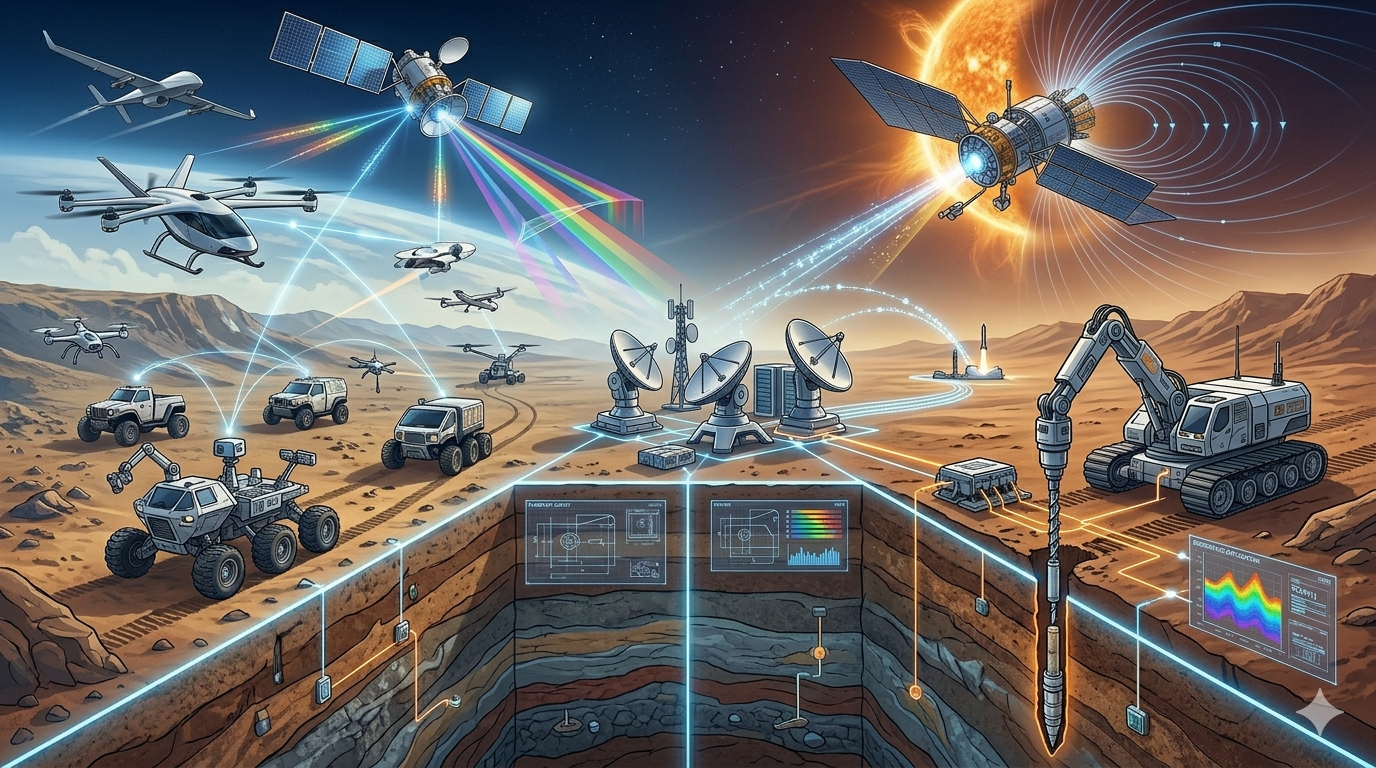
AEON’s scientific work starts with a simple premise: data is only valuable if it changes what the agency can do next. That means research priorities are chosen not only for novelty, but for how well they strengthen mission planning and future discovery.
Discovery with continuity
Flagship discoveries attract attention, but the agency is structured to turn those moments into sustained programs. A spectral signature leads to improved instrumentation. A subsurface anomaly shapes the next sampling protocol. A solar event model changes how crewed vehicles are shielded and routed.
This is how AEON keeps science from becoming disconnected from engineering reality.
Core disciplines
The current science portfolio centers on exoplanet atmospheres, icy moon environments, solar magnetic behavior, and long-baseline observation of the outer system. Each area feeds a different layer of the agency’s roadmap, from remote sensing to crew safety to autonomous exploration.
The portfolio is intentionally broad, but not unfocused. AEON invests where new knowledge can materially alter its ability to travel farther, observe better, or survive longer.
Publishing and review
Every major campaign is expected to produce public-facing reports and internally actionable technical briefs. That publication rhythm matters. It creates traceability between observation, interpretation, and design decisions, which is critical for any agency operating on long time horizons.