

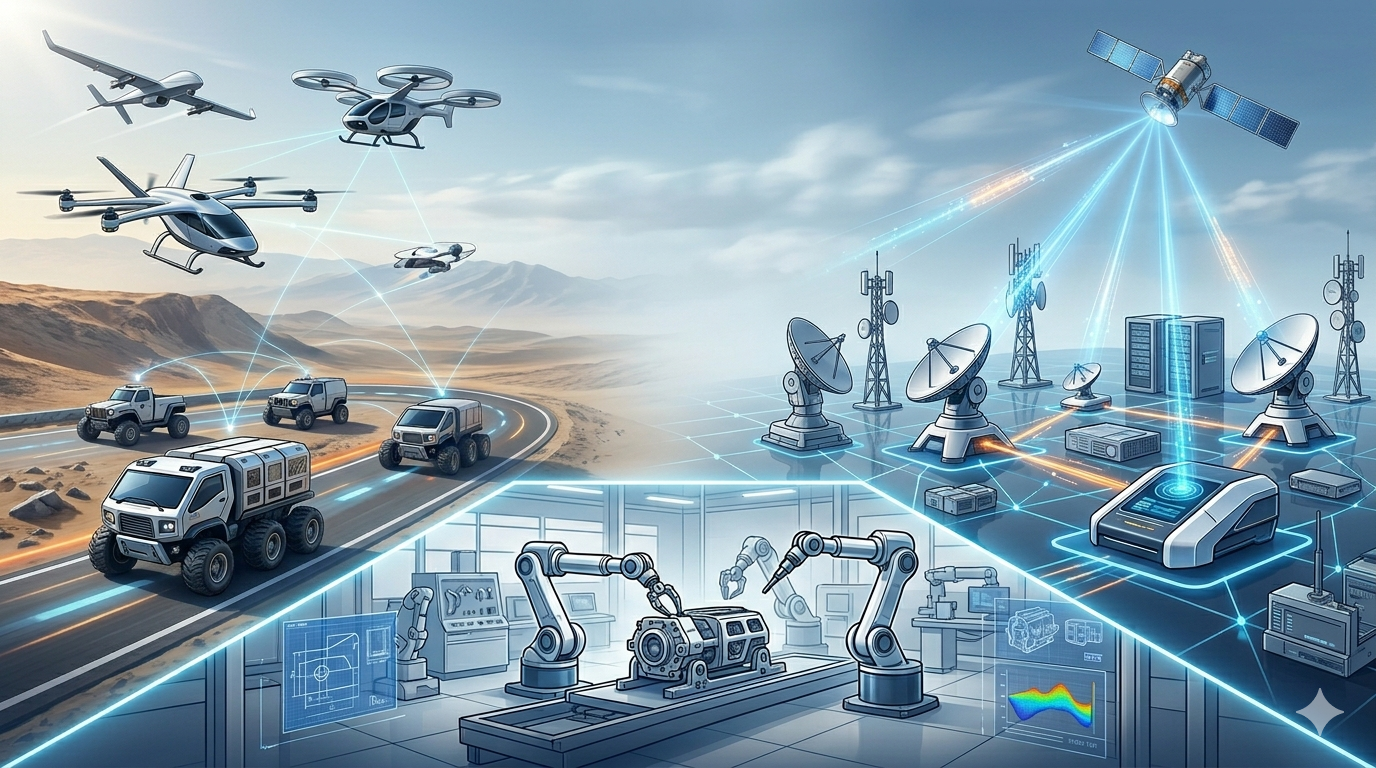
AEON develops technology as an operational layer, not a showroom. Every platform must survive long communication delays, partial failures, and mission conditions that cannot be patched in real time.
Vehicle architecture
Launch systems are designed around modular payload interfaces so the agency can move science, infrastructure, and logistics hardware without rebuilding the full stack for every departure. That speeds up campaign planning and lowers integration risk across consecutive launch windows.
The same logic shapes orbital insertion modules and transfer stages. AEON prefers architectures that accept multiple mission profiles over highly specialized hardware that only performs well inside one narrow envelope.
Autonomy and robotics
Deep-space operations require machines that can interpret degraded signals, navigate uncertainty, and continue useful work when communication with Earth is delayed. AEON’s robotics program therefore prioritizes decision support, terrain interpretation, and adaptive sampling rather than decorative autonomy claims.
Autonomy is treated as a risk-management tool. The more effectively a vehicle can stabilize itself and preserve mission intent, the more aggressive the agency can be with distance and duration.
Relay and observation systems
Communications are mission hardware. AEON’s relay architecture is built to extend telemetry confidence, command resiliency, and data continuity across multiple active theaters. The agency pairs that with observation arrays that can validate events, track anomalies, and preserve scientific context over long campaigns.
That combination turns isolated missions into a connected program with shared awareness.